
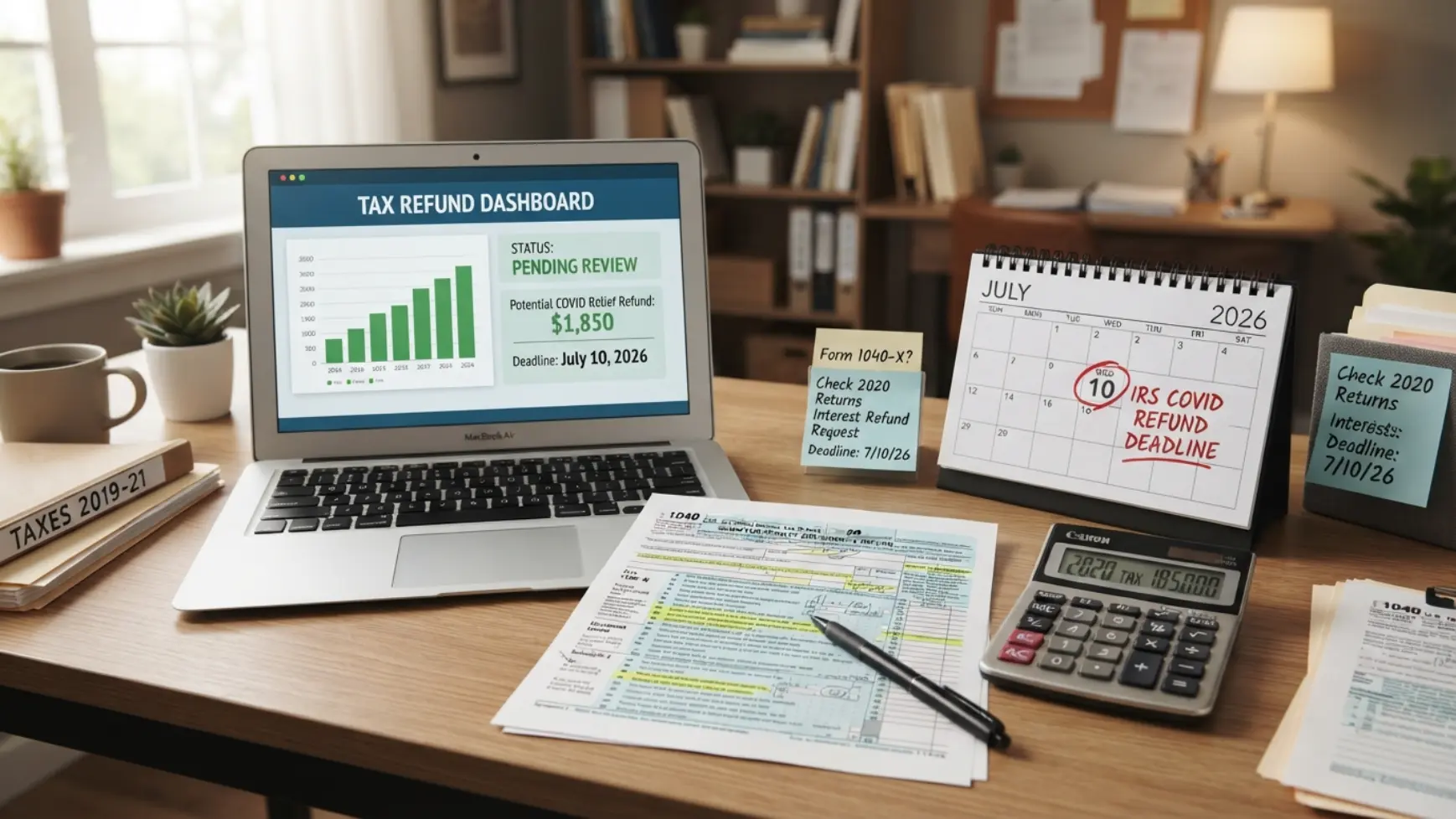
A new tax-related deadline is drawing attention in the United States, but it is important to understand what it actually means. The “COVID tax refund July 2026” update is not a new stimulus check, not a fresh federal relief payment, and not a blanket refund for all taxpayers.
Instead, it concerns a specific group of taxpayers who may have been charged IRS penalties or interest during the COVID-19 disaster period. Some of them may be able to seek a refund or penalty abatement, but they may need to take action by July 10, 2026.
The issue has become important because taxpayers who wait too long may lose the ability to file a valid claim, even if they otherwise have a strong case.
Table of Contents
What Is the COVID Tax Refund July 2026 Update?
The update centers on potential refund claims connected to IRS penalties and interest assessed during the COVID-19 period. Some taxpayers filed returns late, paid taxes late, or were charged penalties and interest for deadlines that may have been affected by COVID-era disaster relief rules.
The National Taxpayer Advocate has warned that certain taxpayers may need to act on or before July 10, 2026, to protect their potential claims.
This does not mean every taxpayer will receive money. It means some taxpayers may have a legal basis to ask the IRS to refund or remove penalties and interest if those charges were improperly assessed.
Why July 10, 2026, Is Important
July 10, 2026, is being treated as a key protective deadline for affected taxpayers. Those who may qualify could need to file one of several documents before that date, depending on their situation.
Possible actions may include filing a refund claim, amended return, original return, abatement request, or protective claim. For many individuals and businesses, the relevant form may be IRS Form 843, which is used to request a refund or abatement of certain penalties, interest, fees, or taxes.
The deadline matters because refund claims are subject to strict time limits. If a taxpayer misses the required filing window, they may be unable to recover money later, even if the IRS or courts eventually confirm broader relief.
Who May Be Affected?
The update may apply to taxpayers who were charged penalties or interest connected to late filing or late payment during the COVID-19 disaster period.
- Taxpayers who may need to review their records include those who:
- Filed federal tax returns late during the affected period.
- Paid federal taxes late and were charged interest or penalties.
- Received IRS notices showing penalty or interest charges for tax years connected to the COVID period.
- Paid IRS penalties or interest that may have been tied to postponed deadlines.
- Still owe penalties or interest from affected tax periods.
The potentially affected years may include 2019 through 2022, depending on the taxpayer’s facts and filing history.
What Is the Legal Background?
The issue is linked to developments involving the Kwong v. United States case. Under the reasoning connected to that litigation, some tax deadlines between January 20, 2020, and July 10, 2023, may have been postponed due to the COVID-19 disaster period.
If a deadline was legally postponed, then some penalties or interest assessed for filing or paying after the original deadline may not have been proper.
However, this area remains technical and situation-specific. Taxpayers should not assume they automatically qualify. The correct action depends on the tax year, type of penalty, payment history, and whether the taxpayer has already paid the amount in question.
IRS Online Filing Option for Form 843
Another July 2026 development is the availability of a new online option for certain Form 843 claims. From July 1, 2026, taxpayers with an IRS Online Account may be able to submit Form 843 electronically for certain claims involving fully paid interest and penalties.
This is significant because Form 843 has traditionally been a paper-based process for many taxpayers. The online option may make filing easier for some people, especially those trying to act before the July 10 deadline.
Still, electronic access does not change the basic rule: a claim must be valid, timely, and supported by the taxpayer’s records.
This Is Not a New Stimulus Check
A major point of confusion is the word “refund.” Many online posts use phrases like “COVID tax refund” in a way that makes it sound like a new federal payment is being sent to everyone.
That is not accurate.
This update is not about new stimulus checks. It is not another round of Economic Impact Payments. It is also not a general COVID relief deposit for all U.S. residents.
The issue is narrower. It applies only to taxpayers who may have paid or been charged certain IRS penalties or interest during affected tax periods.
It Is Also Not the Employee Retention Credit
The COVID tax refund issue should also not be confused with the Employee Retention Credit. The ERC is a business tax credit for eligible employers and tax-exempt organizations that met specific pandemic-era requirements.
The current July 2026 refund issue is different. It focuses mainly on whether certain IRS penalties and interest were properly charged during the COVID disaster period.
Individuals should be cautious of promoters or social media claims that mix these topics together. A taxpayer’s eligibility for one program or claim does not automatically create eligibility for another.
What Taxpayers Should Check Now
Taxpayers who believe they may be affected should first review their IRS account records. Important documents may include IRS notices, account transcripts, tax return transcripts, payment history, and records showing penalties or interest charged for affected years.
They should look for penalty and interest amounts tied to late filing, late payment, or other deadline-related issues during COVID-era tax periods.
If penalties or interest were paid, the taxpayer may need to file a refund claim. If the amount is still owed, an abatement request may be more relevant. In some cases, a protective claim may be appropriate to preserve rights while legal questions remain unresolved.
Why a Protective Claim May Matter
A protective claim is often used when a taxpayer’s right to a refund depends on a future event, pending litigation, or an unresolved legal issue. It allows the taxpayer to preserve the claim before the refund deadline expires.
For the COVID penalty and interest issue, protective claims may be especially important because the legal position is still developing. Filing a protective claim does not guarantee payment, but it may help keep the taxpayer’s claim alive.
Without timely filing, the taxpayer may have no remedy later.
Should Taxpayers Hire a Professional?
For simple cases involving a small penalty or interest charge, some taxpayers may be able to review their IRS account and file the appropriate form themselves. However, complex cases should be handled carefully.
A qualified tax professional may be helpful if the taxpayer has multiple tax years involved, business returns, payroll tax issues, large penalty balances, previous IRS correspondence, or uncertainty about whether the penalty has already been paid.
Because the July 10, 2026, deadline is close, taxpayers should not wait until the last moment to review their records.
Bottom Line
The COVID tax refund July 2026 update is real, but it is narrower than many online posts suggest. It is not a new stimulus payment and not an automatic refund for every taxpayer.
The main issue is whether some taxpayers were improperly charged IRS penalties or interest during the COVID-19 disaster period. Those who may be affected should review their IRS records and consider filing the proper claim before July 10, 2026.
For eligible taxpayers, timely action could preserve the chance to recover money. For everyone else, the safest takeaway is simple: treat viral “COVID refund” claims carefully and verify whether the issue actually applies to your tax account.